Understanding Edge Computing and Its Advantages
Gusti Ayu Tita P
13 Mei 2026
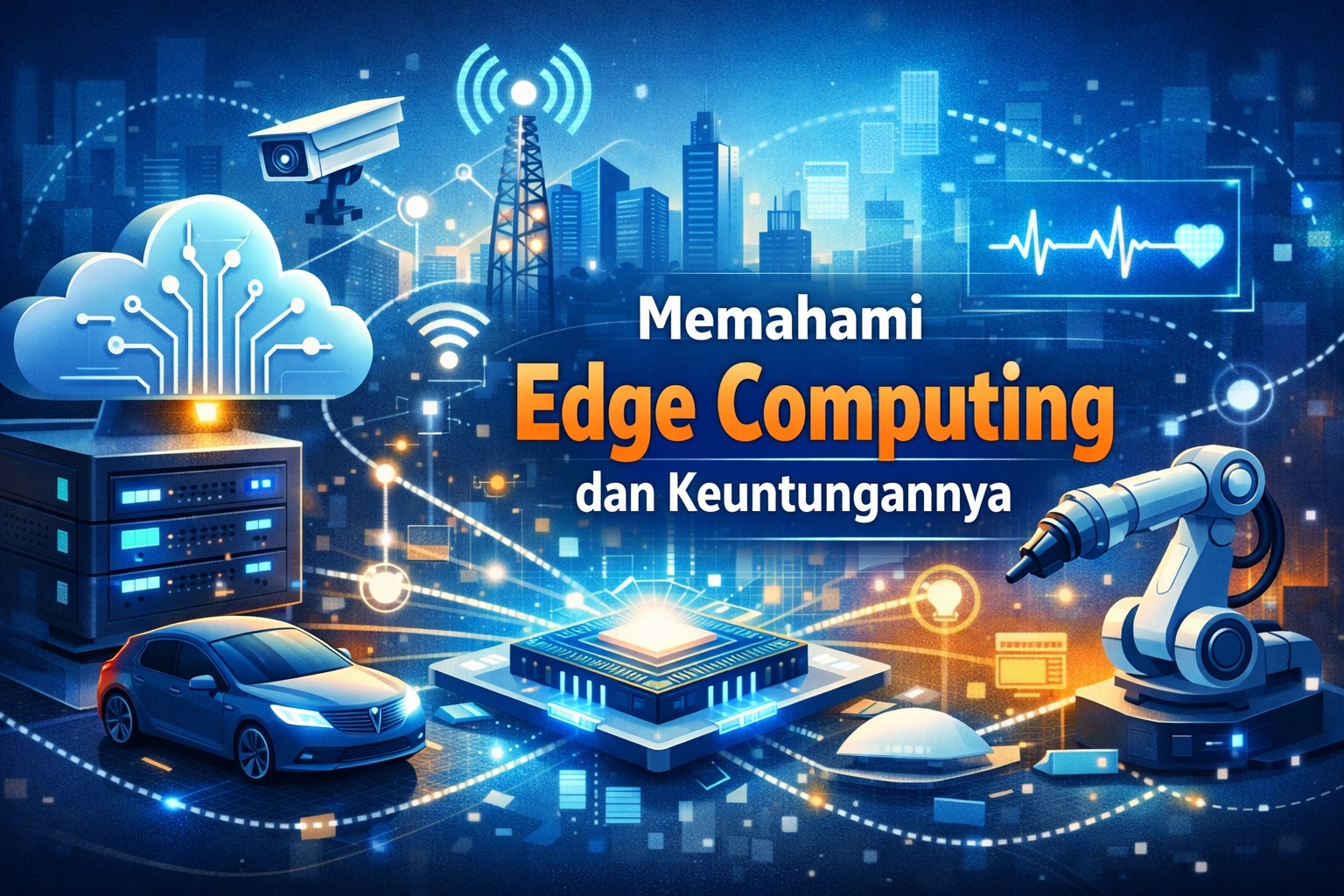
In today’s digital era, the demand for faster data processing and real-time insights has grown significantly. Traditional cloud computing, while powerful, often struggles with latency and bandwidth limitations. This is where edge computing comes into play, offering a transformative approach to data management and application performance.
WHAT IS EDGE COMPUTING?
Edge computing refers to the practice of processing data closer to its source — such as IoT devices, sensors, or local servers — rather than relying solely on centralized cloud data centers. By minimizing the distance between data generation and data processing, edge computing reduces latency and enhances efficiency.
HOW EDGE COMPUTING WORKS
Instead of sending all raw data to the cloud, edge devices or local nodes handle initial processing. Only relevant or refined data is transmitted to the cloud for further analysis. This decentralized model ensures faster response times and reduces the burden on network infrastructure.
KEY ADVANTAGES OF EDGE COMPUTING
- Reduced Latency: Applications like autonomous vehicles, healthcare monitoring, and industrial automation require instant decisions. Edge computing enables near real-time responses.
- Bandwidth Optimization: By processing data locally, only essential information is sent to the cloud, saving bandwidth and reducing costs.
- Enhanced Security: Sensitive data can be processed and stored locally, minimizing exposure to cyber threats during transmission.
- Scalability: Edge computing supports the growing number of IoT devices by distributing workloads efficiently.
- Reliability: Local processing ensures that critical applications continue functioning even if cloud connectivity is disrupted.
REAL-WORLD APPLICATIONS
- Smart Cities: Traffic management systems use edge computing to analyze vehicle flow instantly.
- Healthcare: Wearable devices monitor patient vitals and provide immediate alerts.
- Retail: Edge-powered analytics improve customer experiences through personalized recommendations.
- Manufacturing: Factories leverage edge computing for predictive maintenance and automation.
FUTURE OF EDGE COMPUTING
As 5G networks expand and IoT adoption accelerates, edge computing will become even more critical. It bridges the gap between devices and the cloud, enabling innovations in AI, machine learning, and real-time analytics. Businesses that embrace edge computing will gain a competitive advantage in delivering faster, smarter, and more secure solutions.
Tentang Penulis
Gusti Ayu Tita P
Penulis — Universitas STEKOM
Penulis aktif yang berfokus pada isu-isu akademik, teknologi pendidikan, dan pengembangan sumber daya manusia di lingkungan kampus.