
What Is the Difference Between Psychological Trauma and Stress?
Gusti Ayu Tita P
21 September 2026
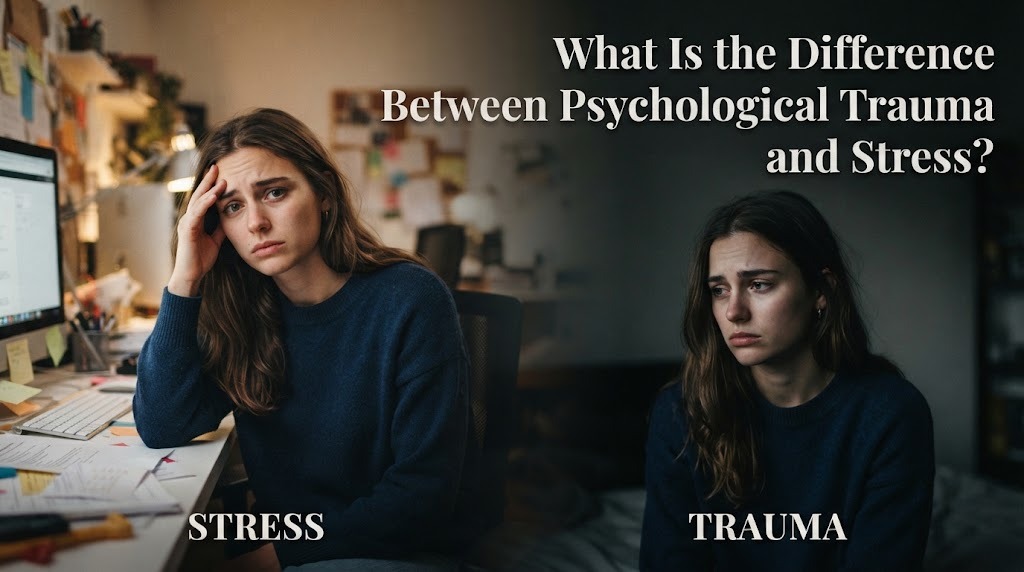
Psychological trauma and stress are both common experiences that can affect a person's emotions, thoughts, and daily activities. However, they are not the same condition and can develop in different ways. Stress often occurs when someone faces pressure, demands, or difficult situations, while psychological trauma can happen after experiencing or witnessing an event that feels deeply threatening or overwhelming. Understanding the difference between psychological trauma and stress can help people recognize their experiences and seek appropriate support.
WHAT IS STRESS?
Stress is the body's natural response to pressure, challenges, or situations that require adjustment. It can happen because of work, school, financial problems, relationship difficulties, or major changes in life. Short-term stress can sometimes help a person stay focused and respond to important situations. However, stress that continues for a long time can affect emotional and physical well-being.
Common signs of stress include feeling worried, tired, irritated, overwhelmed, or unable to relax. A person may also have difficulty sleeping, concentrating, or completing daily tasks. In many cases, stress improves when the situation causing it becomes easier to manage. Healthy routines, enough rest, social support, and appropriate coping strategies can also help reduce stress.
WHAT IS PSYCHOLOGICAL TRAUMA?
Psychological trauma is an emotional and psychological response to an event or experience that is extremely frightening, threatening, or overwhelming. It can occur after events such as serious accidents, violence, abuse, natural disasters, or other experiences that create a strong sense of danger. Trauma can also develop after witnessing a distressing event or repeatedly being exposed to difficult circumstances.
The effects of trauma can continue even after the dangerous situation has ended. A person may experience fear, unwanted memories, nightmares, emotional numbness, difficulty trusting others, or a strong reaction to reminders of the event. Not everyone who experiences a traumatic event develops lasting psychological difficulties. However, when symptoms continue and significantly interfere with daily life, professional mental health support may be helpful.
DIFFERENCES IN THEIR TRIGGERS
One important difference between stress and psychological trauma is the type of experience that triggers them. Stress can result from everyday pressures, such as deadlines, financial concerns, exams, workplace demands, or family responsibilities. These situations may feel difficult but do not necessarily involve a threat to a person's safety or sense of security. Stress can also build gradually when several pressures happen at the same time.
Psychological trauma is generally associated with experiences that are deeply distressing or threatening. The event may be sudden, such as an accident or violent incident, or may involve repeated exposure to harmful experiences. The person's response can depend on the event, their circumstances, previous experiences, and the support available afterward. Therefore, the same event may affect different people in different ways.
DIFFERENCES IN THEIR SYMPTOMS
Stress and trauma can share some symptoms, including sleep problems, difficulty concentrating, irritability, anxiety, and physical tension. This overlap can sometimes make it difficult to immediately identify what someone is experiencing. The intensity and persistence of symptoms, as well as their connection to a particular traumatic experience, can provide important context.
Trauma may also involve symptoms such as intrusive memories, nightmares, avoidance of reminders, emotional numbness, or feeling constantly alert to possible danger. These reactions can make ordinary situations feel unsafe or remind a person of what happened. Stress symptoms may decrease when the source of pressure is removed or managed, while trauma-related symptoms can sometimes remain long after the original event has ended.
CAN STRESS TURN INTO TRAUMA?
Stress does not automatically become psychological trauma. They are different responses, although prolonged or severe stress can contribute to emotional difficulties and may occur alongside trauma. For example, someone dealing with continuous financial problems may experience chronic stress without having experienced a traumatic event. On the other hand, a person may experience trauma and continue to face stress because of its effects on work, relationships, sleep, or daily routines.
It is also possible for a person to experience both stress and trauma at the same time. The important point is not to diagnose oneself based only on a few symptoms. If emotional or physical reactions continue, become difficult to manage, or interfere with daily activities, talking with a qualified mental health professional can provide clearer guidance.
HOW CAN PEOPLE MANAGE STRESS AND TRAUMA?
Managing stress often begins with identifying the main sources of pressure and finding realistic ways to reduce them. Regular sleep, physical activity, balanced meals, relaxation techniques, healthy social connections, and reasonable time management can support overall well-being. It can also help to divide large responsibilities into smaller tasks instead of trying to solve everything at once. When stress becomes overwhelming or continues for a long time, professional support may be appropriate.
Recovery from psychological trauma may require a different approach because traumatic experiences can affect a person's sense of safety and emotional responses. A mental health professional can help someone process difficult experiences and develop healthier ways to respond to triggers and distressing thoughts. Treatment options vary depending on the person's needs and may include evidence-based forms of psychotherapy. Recovery is often gradual, and having supportive people around can also make the process easier.
WHEN SHOULD SOMEONE SEEK PROFESSIONAL HELP?
Professional help can be considered when stress or trauma symptoms begin to interfere with work, education, relationships, sleep, or other important parts of daily life. People may also benefit from support when they feel unable to manage their emotions or when symptoms continue instead of improving. Signs such as persistent fear, severe avoidance, recurring distressing memories, or significant changes in daily functioning should not be ignored. Seeking help does not mean that someone is weak or unable to cope.
A qualified mental health professional can assess the person's symptoms and circumstances rather than relying on a single symptom. They can also help determine whether the difficulties are related to stress, trauma, another mental health condition, or several factors at the same time. Getting support early can help a person understand what they are experiencing and identify appropriate ways to cope.
CONCLUSION
The main difference between psychological trauma and stress is their typical triggers, emotional responses, and effects over time. Stress commonly develops from pressure and challenging situations, while psychological trauma is generally connected to deeply distressing or threatening experiences. Both can affect sleep, concentration, emotions, relationships, and daily activities, but trauma may involve specific reactions such as intrusive memories and avoidance. Understanding these differences can help people recognize when they may need additional support. When symptoms become persistent or disruptive, consulting a qualified mental health professional can be an important step toward recovery.
Tentang Penulis
Gusti Ayu Tita P
Penulis — Universitas STEKOM
Penulis aktif yang berfokus pada isu-isu akademik, teknologi pendidikan, dan pengembangan sumber daya manusia di lingkungan kampus.















