When Can Inner Conflict Become a Sign of Emotional Pressure?
Gusti Ayu Tita P
21 September 2026
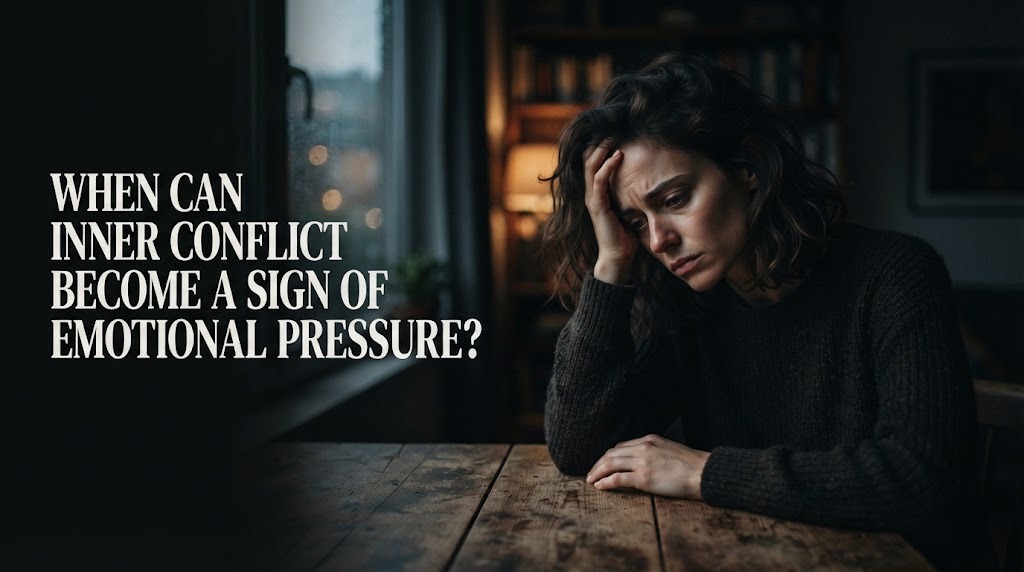
Inner conflict is a normal experience that can happen when thoughts, emotions, values, or desires do not agree with one another. However, when the conflict continues for a long time and creates increasing emotional tension, it may become a sign of emotional pressure. A person may feel mentally tired, worried, frustrated, or unable to relax. The situation can become more difficult when the person does not know how to express or manage these feelings.
Emotional pressure does not always appear suddenly. It can gradually develop when someone repeatedly ignores personal needs, avoids difficult decisions, or carries too many expectations. Recognizing the connection between inner conflict and emotional pressure can help a person understand when they need to slow down, reflect, and seek appropriate support.
HOW DOES INNER CONFLICT CREATE EMOTIONAL PRESSURE?
Inner conflict can create emotional pressure when a person feels forced to deal with opposing thoughts or emotions at the same time. For example, someone may want to follow a personal goal but also feel responsible for meeting another person's expectations. Both concerns may be important, making it difficult to choose one without feeling uncomfortable. This ongoing tension can gradually become emotionally exhausting.
The pressure may become stronger when there seems to be no satisfying solution. A person may repeatedly think about the same problem without reaching clarity. Unresolved inner conflict can occupy attention and make ordinary situations feel more difficult. Over time, this can contribute to frustration, worry, and mental fatigue.
WHEN DOES OVERTHINKING BECOME A SIGN OF EMOTIONAL PRESSURE?
Overthinking can be a normal response to an important situation, especially when a decision has serious consequences. However, it may become a sign of emotional pressure when the same thoughts continue repeatedly without helping the person move forward. Someone may replay conversations, imagine negative outcomes, or repeatedly question whether they made the right choice. This pattern can make the mind feel constantly active.
Another sign is difficulty taking a mental break from the problem. Even when studying, working, resting, or spending time with others, the person may continue thinking about the conflict. Persistent overthinking can consume emotional energy and make it harder to concentrate. Recognizing this pattern can encourage the person to step back and approach the situation more calmly.
CAN EMOTIONAL CHANGES SHOW THAT INNER CONFLICT IS BECOMING TOO MUCH?
Changes in emotions can sometimes indicate that an inner conflict is creating significant pressure. A person may become more easily frustrated, worried, sensitive, or emotionally tired than usual. These changes do not automatically mean that something is seriously wrong. However, when they continue and are clearly connected to an unresolved problem, they deserve attention.
A person may also experience difficulty feeling relaxed or satisfied even during positive moments. The unresolved conflict can remain in the background and affect their emotional state. Emotional exhaustion may develop when someone spends a great deal of mental energy trying to solve the same issue. Paying attention to these changes can help identify when additional support may be useful.
HOW CAN INNER CONFLICT AFFECT SLEEP AND CONCENTRATION?
Strong emotional pressure can sometimes affect everyday functioning. A person may find it difficult to concentrate because their thoughts repeatedly return to the unresolved conflict. Tasks that normally feel manageable may require more effort. This can lead to mental fatigue and reduced productivity.
Rest can also become more difficult when the mind remains focused on the conflict. Some people may think about the problem more intensely at night when there are fewer distractions. Writing down concerns, creating a calming routine, and giving yourself time away from the problem may help. If sleep or concentration problems continue and interfere with daily life, seeking appropriate support can be helpful.
WHY CAN HIDING INNER CONFLICT INCREASE EMOTIONAL PRESSURE?
Hiding inner conflict can increase emotional pressure when a person feels unable or unwilling to communicate what they are experiencing. They may fear being judged, misunderstood, criticized, or seen as weak. As a result, they keep difficult thoughts and emotions to themselves. Although privacy can be healthy, consistently avoiding an important problem may allow the emotional pressure to grow.
Keeping everything inside can also make the person feel isolated. Without another perspective, they may continue interpreting the situation through the same thoughts and assumptions. Healthy communication with a trusted person can sometimes create emotional space and provide a different perspective. The goal is not to share everything with everyone but to avoid carrying every difficult feeling alone.
HOW CAN SOMEONE MANAGE EMOTIONAL PRESSURE CAUSED BY INNER CONFLICT?
Managing emotional pressure begins with identifying what is actually creating the conflict. A person can write down their thoughts, emotions, fears, responsibilities, and expectations. Separating facts from assumptions can make the situation easier to understand. It may also help to identify which parts of the problem can be controlled and which cannot.
Taking a short break from constant analysis can give the mind an opportunity to recover. Talking with a trusted person, practicing healthy routines, or spending quiet time can also reduce emotional pressure. If the conflict continues to interfere with relationships, work, education, sleep, or daily activities, professional support may be appropriate. Self-awareness, emotional acceptance, and healthy coping strategies can help a person respond to inner conflict without allowing the pressure to become overwhelming.
CONCLUSION
Inner conflict can become a sign of emotional pressure when unresolved thoughts and emotions begin to create persistent tension and affect daily life. Frequent overthinking, emotional exhaustion, difficulty concentrating, sleep problems, and withdrawing from others may indicate that the pressure deserves attention. These experiences do not automatically indicate a serious problem, but they can be useful signals to slow down and understand what is happening internally. Through self-awareness, emotional acceptance, healthy communication, and appropriate support, a person can gradually reduce emotional pressure and manage inner conflict more effectively.
Tentang Penulis
Gusti Ayu Tita P
Penulis — Universitas STEKOM
Penulis aktif yang berfokus pada isu-isu akademik, teknologi pendidikan, dan pengembangan sumber daya manusia di lingkungan kampus.