When Does Inner Conflict Begin to Affect Emotional Well Being?
Gusti Ayu Tita P
21 September 2026
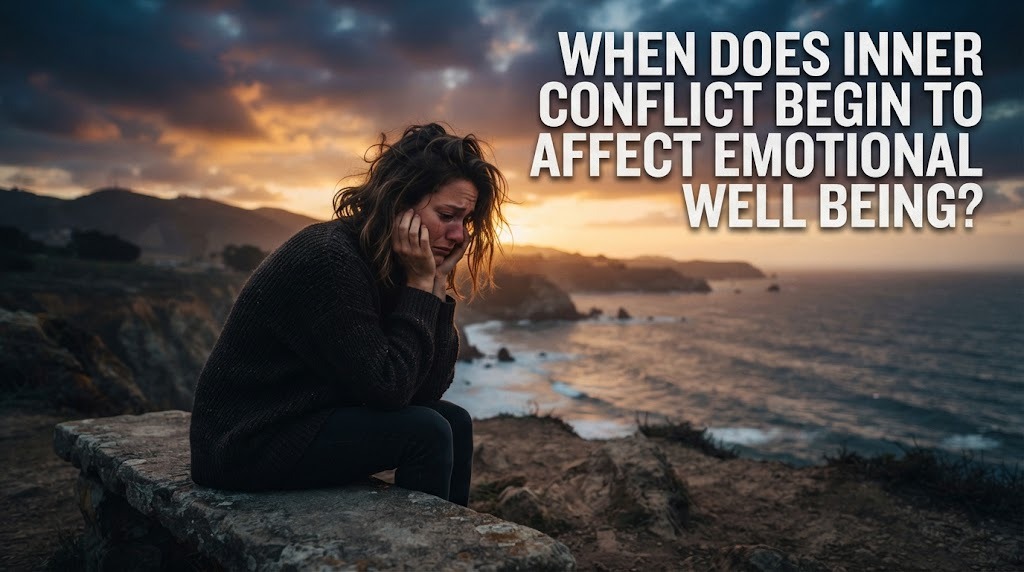
Inner conflict is a normal part of life, especially when people face difficult decisions, competing priorities, or different expectations. However, when conflicting thoughts and emotions continue without resolution, they can begin to affect emotional well-being. A person may feel increasingly stressed, distracted, uncertain, or emotionally tired. The effects can become more noticeable when inner conflict starts interfering with everyday activities and relationships. Understanding these signs can help people respond before the situation becomes more difficult to manage.
WHAT IS INNER CONFLICT AND EMOTIONAL WELL BEING?
Inner conflict occurs when a person experiences opposing thoughts, emotions, values, or desires. For example, someone may want to change their career but feel afraid of leaving a familiar job. Another person may want to express their opinion but worry about disappointing people around them. These competing feelings can create emotional tension that is difficult to ignore.
Emotional well-being refers to a person's ability to understand and manage emotions while dealing with everyday challenges. Experiencing occasional uncertainty does not necessarily mean that emotional well-being is being harmed. The concern becomes greater when inner conflict is persistent, intense, or disruptive. At that point, the emotional pressure may begin affecting how a person thinks, behaves, and interacts with others.
WHEN DOES INNER CONFLICT BECOME EMOTIONALLY EXHAUSTING?
Inner conflict can become emotionally exhausting when a person spends a significant amount of time repeatedly thinking about the same issue. Constantly comparing options, imagining negative outcomes, or questioning previous decisions can consume considerable mental energy. This may lead to mental fatigue and emotional stress. Even when no action is being taken, the mind can remain active because the unresolved issue continues to demand attention.
Another warning sign is difficulty mentally switching away from the problem. A person may continue thinking about a conflict while working, studying, eating, or trying to relax. When this happens frequently, everyday activities may become less enjoyable. Persistent overthinking can therefore make an ordinary disagreement or difficult decision feel much heavier over time.
HOW CAN INNER CONFLICT AFFECT MOOD AND EMOTIONS?
Unresolved inner conflict can influence a person's mood and emotional responses. Someone may become more easily frustrated, worried, disappointed, or emotionally sensitive. Small problems may feel more difficult when a person is already carrying unresolved emotional tension. These changes do not necessarily have a single cause, but ongoing stress can contribute to emotional difficulties.
A person may also experience a cycle in which difficult emotions create more conflicting thoughts. For example, worry about a decision can lead to more analysis, while excessive analysis can create even more worry. Recognizing this pattern can help someone step back and examine what is actually happening. Emotional awareness can make it easier to distinguish between useful reflection and repetitive thinking.
CAN INNER CONFLICT AFFECT DAILY ACTIVITIES?
Yes, inner conflict can become a concern when it starts interfering with daily functioning. A person may have difficulty concentrating on work or education because their attention remains focused on an unresolved issue. They may also postpone decisions, avoid conversations, or lose motivation to complete normal responsibilities. These changes can create additional stress and make the original conflict feel even more difficult.
Daily routines can also be affected when emotional tension continues for an extended period. Someone may find it harder to enjoy activities that normally provide relaxation or satisfaction. When an internal problem repeatedly interferes with responsibilities, relationships, or normal routines, it is useful to take the situation seriously. Changes in everyday functioning can be an important signal that additional support may be helpful.
HOW CAN INNER CONFLICT AFFECT RELATIONSHIPS?
Relationship difficulties can develop when unresolved inner conflict changes the way a person communicates with others. Someone may become unusually quiet because they are unsure how to express their feelings. Another person may react more strongly than usual because they are already experiencing emotional pressure. These reactions can create misunderstandings between friends, family members, partners, or colleagues.
Inner conflict may also cause people to avoid important conversations. Avoidance can temporarily reduce discomfort, but it may leave the underlying problem unresolved. Healthy communication and clear boundaries can help people express their concerns more effectively. When appropriate, discussing the situation with someone trustworthy can also provide another perspective.
WHAT ARE THE SIGNS THAT YOU NEED MORE SUPPORT?
There is no single moment when inner conflict automatically becomes a serious emotional problem. However, it is worth paying closer attention when distress is persistent, increasingly difficult to manage, or significantly interferes with daily life. Examples can include ongoing difficulty concentrating, persistent emotional distress, withdrawal from normal activities, or repeated inability to manage everyday responsibilities. The important factor is the overall pattern and its effect on a person's functioning.
If these difficulties continue or become difficult to handle independently, speaking with a qualified mental health professional can be a practical option. Professional support can help a person explore recurring thoughts, emotions, and patterns in a structured setting. Seeking support does not mean that someone has failed to handle their problems. It can simply be another way to understand the situation and develop healthier coping strategies.
HOW CAN YOU PROTECT YOUR EMOTIONAL WELL BEING?
Managing inner conflict starts with identifying what is creating the tension. Writing down your thoughts, separating facts from assumptions, and identifying your most important priorities can provide greater mental clarity. It can also help to take regular breaks, maintain healthy routines, and avoid making important decisions while overwhelmed by intense emotions. These simple steps can create more space for thoughtful reflection.
It is also important to accept that some uncertainty cannot be eliminated completely. Not every decision has a perfect answer, and not every conflict can be resolved immediately. Self-awareness, realistic expectations, and healthy coping strategies can help people respond to difficult situations without allowing them to dominate everyday life. If the conflict continues to cause significant distress, seeking appropriate professional support is a reasonable step.
CONCLUSION
Inner conflict begins to affect emotional well-being when it becomes persistent, overwhelming, or disruptive to everyday life. Repeated overthinking, emotional exhaustion, difficulty concentrating, relationship problems, and changes in normal routines can indicate that unresolved conflict is creating too much pressure. Recognizing these signs early can help a person take practical steps to regain balance. Self-awareness, healthy communication, realistic priorities, and professional support when needed can all contribute to better emotional well-being. Inner conflict is a normal human experience, but it does not have to control a person's daily life.
Tentang Penulis
Gusti Ayu Tita P
Penulis — Universitas STEKOM
Penulis aktif yang berfokus pada isu-isu akademik, teknologi pendidikan, dan pengembangan sumber daya manusia di lingkungan kampus.