
Why Are Digital Campaigns More Effective Than Traditional Marketing?
Gusti Ayu Tita P
21 September 2026
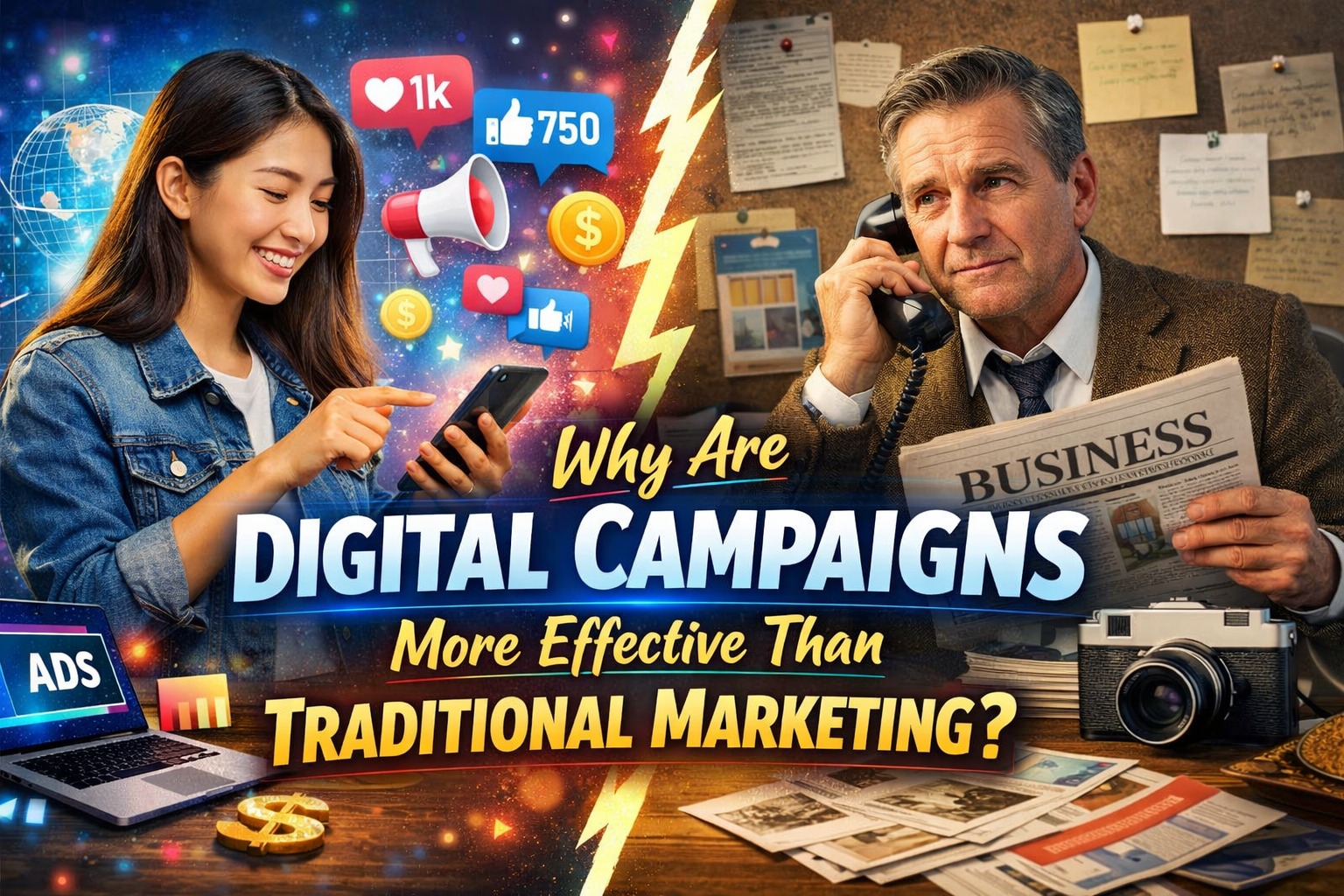
In today's competitive business environment, companies need marketing strategies that can reach the right audience quickly and efficiently. While traditional marketing methods such as television, newspapers, radio, and billboards are still relevant in certain situations, digital campaigns have become the preferred choice for businesses of all sizes. Their ability to target specific audiences, measure performance, and optimize results makes them more effective than conventional approaches.
Businesses that embrace digital marketing can connect with customers through websites, search engines, social media, email, and online advertisements. These channels allow brands to communicate directly with consumers, improve engagement, and increase sales while maintaining a cost-effective marketing budget.
WIDER AUDIENCE REACH
One of the biggest advantages of digital campaigns is their ability to reach a global audience without geographical limitations. Businesses can promote products or services to customers across different cities or countries through various online platforms. This broad reach creates more opportunities for companies to expand their market and attract new customers.
Unlike traditional marketing, which is often limited to a local or regional audience, digital campaigns operate around the clock. Potential customers can discover a business anytime through search engines, social media, or online advertisements, making marketing efforts more consistent and accessible.
PRECISE AUDIENCE TARGETING
A major reason why digital campaigns outperform traditional marketing is their advanced targeting capabilities. Businesses can define their target audience based on factors such as age, gender, interests, location, purchasing behavior, and online activities. This ensures that marketing messages are delivered to people who are most likely to become customers.
Better targeting also reduces unnecessary advertising expenses. Instead of spending money on audiences with little interest in a product, companies can invest their budget where it generates the highest return, improving both efficiency and conversion rates.
COST EFFECTIVENESS
Compared to television commercials, newspaper advertisements, or large billboards, digital marketing is generally more affordable. Even small businesses and startups can launch effective campaigns using limited budgets while still competing with larger companies.
Digital advertising platforms also offer flexible spending options. Businesses can adjust their budgets, pause campaigns, or increase investments based on performance, making it easier to control marketing costs while maximizing return on investment.
REAL TIME PERFORMANCE ANALYSIS
One of the strongest benefits of digital campaigns is the ability to monitor campaign performance in real time. Marketers can instantly track website traffic, clicks, impressions, conversions, engagement rates, and customer behavior using various analytics tools.
This valuable data helps businesses make informed decisions. If a campaign is underperforming, marketers can immediately modify content, targeting, or advertising strategies without waiting weeks or months for results, unlike many traditional marketing methods.
HIGHER CUSTOMER ENGAGEMENT
Digital campaigns encourage two-way communication between businesses and consumers. Customers can comment on posts, send messages, write reviews, and share content with others. This interaction strengthens relationships and builds trust between brands and their audiences.
Engaged customers are also more likely to become loyal buyers. By responding quickly to questions, feedback, and concerns, businesses demonstrate excellent customer service while creating positive brand experiences that encourage repeat purchases.
EASY CONTENT PERSONALIZATION
Modern consumers appreciate personalized experiences, and digital campaigns make personalization much easier. Businesses can recommend products based on browsing history, previous purchases, or customer preferences, creating more relevant marketing messages.
Personalized content improves customer satisfaction because people receive information that matches their interests. As a result, businesses often experience higher click-through rates, stronger engagement, and increased sales compared to generic advertising.
BETTER SEARCH ENGINE VISIBILITY
A well-planned digital campaign often includes Search Engine Optimization (SEO), helping businesses appear in search engine results when customers look for relevant products or services. Higher search rankings generate consistent organic traffic without relying entirely on paid advertisements.
SEO also supports long-term business growth because quality content continues attracting visitors over time. Combined with social media and paid advertising, SEO creates a comprehensive digital marketing strategy that delivers sustainable results.
CONCLUSION
Digital campaigns have transformed the way businesses promote products and communicate with customers. Their ability to reach broader audiences, target specific customer groups, measure performance, personalize content, and optimize campaigns in real time gives them significant advantages over traditional marketing.
Although traditional marketing still has its place in certain industries, businesses seeking higher efficiency, better customer engagement, and measurable results should prioritize digital campaigns as part of their long-term marketing strategy. Combining creativity with data-driven decision-making allows companies to remain competitive and achieve sustainable business growth.
Tentang Penulis
Gusti Ayu Tita P
Penulis — Universitas STEKOM
Penulis aktif yang berfokus pada isu-isu akademik, teknologi pendidikan, dan pengembangan sumber daya manusia di lingkungan kampus.















