Why Can Inner Conflict Change the Way Someone Sees Themselves?
Gusti Ayu Tita P
21 September 2026
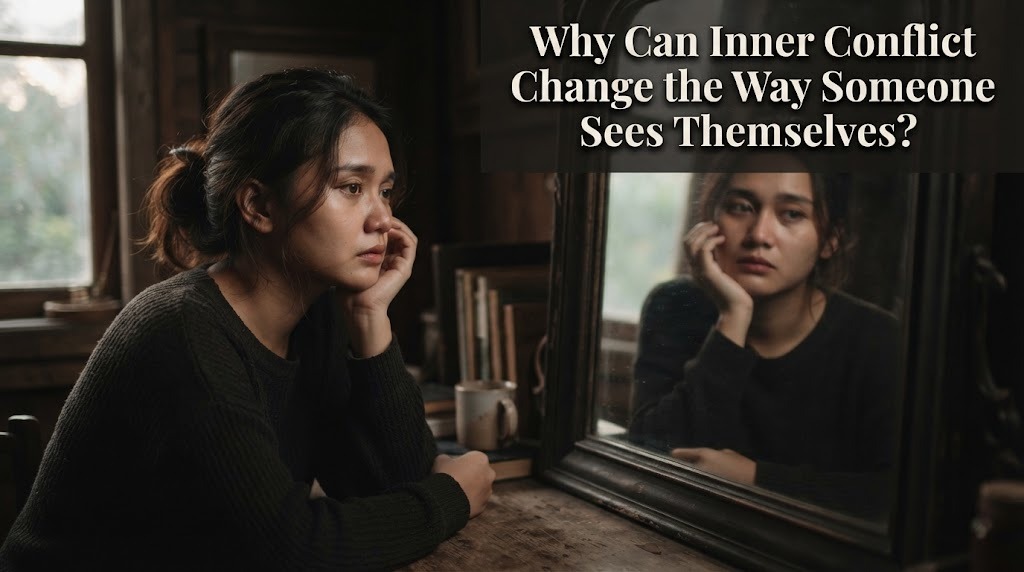
Inner conflict can influence the way a person sees themselves because opposing thoughts and emotions can create uncertainty about personal identity, abilities, and values. Someone may know what they want but still question whether their choices are right. This can lead to self-doubt, confusion, and changes in self-perception. When the conflict continues, a person may begin to judge themselves based on their uncertainty rather than their actual qualities.
The way people see themselves is influenced by their experiences, decisions, relationships, and personal values. When these areas come into conflict, their sense of identity can temporarily feel less clear. Understanding this connection can help a person recognize that feeling confused does not necessarily mean they have changed as a person.
HOW DOES INNER CONFLICT CREATE SELF-DOUBT?
Inner conflict can create self-doubt when a person repeatedly questions their thoughts, decisions, or abilities. For example, someone may want to pursue a particular goal but worry that they are making the wrong choice. When this uncertainty continues, they may begin questioning whether they are capable of achieving what they want.
Repeated self-questioning can also make a person focus more on perceived weaknesses than strengths. A single difficult decision may become connected to broader thoughts such as not being good enough or not knowing what they want. However, experiencing uncertainty does not automatically mean that a person lacks ability. It may simply indicate that they are facing a complicated situation that requires reflection.
WHY CAN CONFLICTING VALUES CHANGE SELF-PERCEPTION?
Personal values are an important part of how people understand themselves. A person may value independence, family, success, security, honesty, or personal happiness, but these values can sometimes point toward different choices. When this happens, someone may wonder which values truly represent who they are.
This uncertainty can temporarily change their self-perception. For example, a person who considers themselves independent may feel conflicted when they need support from others. This does not mean their identity has suddenly changed. It may simply show that different parts of their personality and values are being tested by a particular situation.
CAN PAST MISTAKES MAKE INNER CONFLICT AFFECT SELF-IMAGE?
Past mistakes can make inner conflict stronger when a person continues judging themselves based on what happened. Someone may regret a decision and begin thinking that the mistake defines their character. This can create a negative self-image and make future decisions more difficult.
However, a mistake is an experience rather than a complete definition of a person. People can learn from poor decisions while still recognizing their strengths and positive qualities. Separating a past action from personal identity can help reduce unnecessary self-criticism. Self-reflection becomes more useful when it focuses on learning rather than punishment.
HOW CAN INNER CONFLICT AFFECT CONFIDENCE?
Inner conflict can reduce confidence when a person constantly questions whether they can trust their own judgment. They may ask other people for reassurance, change decisions repeatedly, or avoid taking action because they fear making another mistake. This pattern can make personal confidence feel weaker over time.
Confidence does not require complete certainty. A person can still make a thoughtful choice while recognizing that some uncertainty will remain. Healthy confidence develops when someone learns to consider information, understand emotions, and trust their ability to respond to challenges. Building this confidence can gradually reduce the influence of inner conflict on self-perception.
WHY CAN OTHER PEOPLE'S EXPECTATIONS CHANGE HOW SOMEONE SEES THEMSELVES?
Other people's expectations can become part of inner conflict when a person feels pressure to behave according to a certain image. Family, friends, coworkers, or society may have ideas about what someone should achieve or how they should live. When personal desires do not match those expectations, the person may begin questioning their own choices.
This can lead to a gap between personal identity and external expectations. Someone may believe they are unsuccessful simply because they do not follow the path others consider ideal. Recognizing this difference can help a person evaluate whether a belief truly comes from personal values or from outside pressure. This does not mean ignoring useful advice, but it allows the person to make more conscious choices.
HOW CAN SOMEONE DEVELOP A HEALTHIER VIEW OF THEMSELVES?
Developing a healthier self-view begins with recognizing that inner conflict is only one part of a person's experience. Writing down conflicting thoughts can help identify which concerns are based on facts, emotions, fears, or other people's expectations. It can also help to remember past achievements and personal strengths instead of focusing only on current uncertainty.
A person can also give themselves permission to change their opinions or priorities as they gain new experiences. Personal growth does not require having a fixed identity at every moment. Talking with a trusted person can provide another perspective when self-judgment becomes excessive. If persistent inner conflict significantly affects daily functioning or well-being, appropriate professional support may also be helpful.
CONCLUSION
Inner conflict can change the way someone sees themselves because competing thoughts, values, emotions, and expectations can create self-doubt and uncertainty. Past mistakes, reduced confidence, and external pressure may further influence self-perception. However, feeling conflicted does not mean that a person's identity or worth has changed. Through self-reflection, self-awareness, healthy confidence, and acceptance of personal growth, someone can develop a more balanced understanding of who they are.
Tentang Penulis
Gusti Ayu Tita P
Penulis — Universitas STEKOM
Penulis aktif yang berfokus pada isu-isu akademik, teknologi pendidikan, dan pengembangan sumber daya manusia di lingkungan kampus.